Symptom: Can't seem to hit long irons, knockdown shots, or get yourself to deliver a descending blow to the ball. Or, maybe you can do these things sometimes but not always, and you are not sure how to improve your consistency.
Description: The central tenet of the Stack and Tilt swing is that you "tilt" your spine TOWARDS the target on the backswing, such that you feel almost as if your head is moving AHEAD of the ball. From this position at the top, your downswing will naturally come on an inside path, with a descending blow. Your head will also stay more still, giving you more consistency.
Why it Works: The Stack and Tilt golf swing has been described many times, with much hype, on TV, magazines, with DVDs and training programs you can buy, and so on. The Stack and Tilt Swing doesn't look too different from a regular golf swing, at first glance. There is one key philosophical difference, though, that does distinguish the "Stack and Tilt" philosophy from a more conventional or traditional golf swing.
In the Stack and Tilt is that you try to tilt your spine TOWARD the target on the backswing. This keeps more weight on your front foot than you would otherwise have, prevents you from swaying to the left on the backswing, and perhaps most importantly, ensures that your head stays VERY STILL on the backswing and the downswing.
From this position at the top, you will need to clear your hips very fast, allowing for an inside path on the downswing, giving you that coveted descending blow, and good lag that are mandatory for power and consistency.
Whether you adopt the Stack and Tilt swing for all your shots is up to you. I have found it to be a useful swing thought and practice drill for longer clubs, because it does tend to shorten the backswing and thus prevent over-swinging. This swing thought is also very useful for hitting knockdown or three-quarter shots (as in the five-iron backoff drill). Perhaps most importantly, I have found that the "spine angle towards target" swing was very easy to do -- a couple practice swings and a few shots was all it took for me to start hitting good quality shots in this style.
So give it a try next time you are on the range. You might just find something new and exciting for your game in the Stack and Tilt philosophy.
Posted by GolfTipEditor
Showing posts with label golf swing. Show all posts
Showing posts with label golf swing. Show all posts
Tuesday, February 2, 2010


Thursday, January 21, 2010
Product Review: TaylorMade Super Drivers .
The TaylorMade R9 driver featured a 420cc head, three movable weights and a system that allowed golfers to unscrew the clubhead and re-attach it to the shaft in one of eight different positions. Next came the bigger and more powerful R9 460, which also featured the adjustable head but lacked the movable weights.
Players who wanted a TaylorMade driver that combined a 460cc head with three movable weights and an adjustable face were out of luck ... until now. TaylorMade is set to release the R9 SuperTri and R9 SuperTri TP drivers on Feb. 19.
The all-black head of the SuperTri is reminiscent of the r7 SuperQuad, which TaylorMade says was one of its most-popular clubs.
From a performance standpoint, the 460cc head of the SuperTri is more forgiving that the original R9. Because the center of gravity has been moved lower and 2 millimeters back in the head, drives should launch higher with slightly more spin for greater carry distance. In fact, the center of gravity in the SuperTri is even slightly lower and farther back than the R9 460's. The face is also the deepest TaylorMade has ever produced.

According to TaylorMade, the eight different face-angle settings combine with the three adjustable weights (two 1-gram weights and one 16-gram weight) to give the SuperTri up to 75 yards of left-or-right adjustability. In addition, as golfers adjust the face to be more closed, effective loft is added, which increases the launch angle. Adjusting the face to be more open decreases effective loft for a lower trajectory.
The R9 SuperTri will be available in four lofts (8.5°, 9.5°, 10.5°, 11.5°) and come standard with a Fujikura Motore 60-gram shaft in one of five flexes (L, M, R, S, X) for $399. The R9 SuperTri TP features the same head with a choice of 10 premium shafts, including the Aldila Voodoo and Matrix Ozik, for $499.
Article by David Dusek
Golf.com
Players who wanted a TaylorMade driver that combined a 460cc head with three movable weights and an adjustable face were out of luck ... until now. TaylorMade is set to release the R9 SuperTri and R9 SuperTri TP drivers on Feb. 19.
The all-black head of the SuperTri is reminiscent of the r7 SuperQuad, which TaylorMade says was one of its most-popular clubs.
From a performance standpoint, the 460cc head of the SuperTri is more forgiving that the original R9. Because the center of gravity has been moved lower and 2 millimeters back in the head, drives should launch higher with slightly more spin for greater carry distance. In fact, the center of gravity in the SuperTri is even slightly lower and farther back than the R9 460's. The face is also the deepest TaylorMade has ever produced.

The R9 SuperTri will be available in four lofts (8.5°, 9.5°, 10.5°, 11.5°) and come standard with a Fujikura Motore 60-gram shaft in one of five flexes (L, M, R, S, X) for $399. The R9 SuperTri TP features the same head with a choice of 10 premium shafts, including the Aldila Voodoo and Matrix Ozik, for $499.
Article by David Dusek
Golf.com
Tuesday, November 24, 2009
Perfecting the Pitch and Run Or Bump and Run Golf Shot in Your Golf Game.
One technique which you need to include in your short game arsenal is the 'pitch and run' or 'bump and run' which is designed to keep your ball low and run in onto the green in windy conditions.
As with all shots the first thing you need to do is to select the right club and most golfers will tell you that the ideal club for the 'pitch and run' is a 7 iron or, if you need a little less loft and more distance because you are still a long way from the green (say more than 150 feet), a 5 iron.
Now the choice of clubs is always something of a thorny subject so here is my advice. Do not worry about what the experts say and, whatever shot you are trying to make, take the club which you are most comfortable with and in which you have the most confidence. Practice with all of the clubs in your bag in a wide variety of different situations and then choose whichever club works best for you in each case.
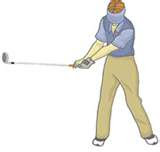
Once you have chosen your club position yourself to take your shot just as you would for any normal pitch shot. Remember that you want to address the ball so that your front foot is at a 45 degree angle to the target line and your shoulders and body are open and almost facing the target. The ball should also be positioned in the middle of your stance.
When it comes to taking your swing imagine that you are looking at a large clock face straight in front of you. Now the arc of your swing will depend upon the distance you want your ball to fly, remembering that you want your ball to land in front of the green so that it can then run up onto the putting surface.
To begin practicing this shot you should aim to take your club back to no farther than 4 o'clock on your imaginary clock face and then follow through to no more than 7 o'clock. You can then adjust this arc to suit your own style of play and will find that the farther back you take the club the farther your ball will fly. The secret however is to keep the arc as small as possible.
Two other things to remember. First, you must ensure that the arc of your swing, on the back swing, down swing and follow through, remains on your target line throughout. Second, your swing must be relaxed and fluid and you must not slow the club head as it strikes through the ball.
As with all golf shots the 'pitch and run' is something which you must practice over a range of distances and in differing wind conditions. The secret however is to choose the right club for you, stick to the simple rules of the shot and, above all, relax, swing naturally and let your club do the work.
Article Source: http://EzineArticles.com/?expert=Donald_Saunders

Now the choice of clubs is always something of a thorny subject so here is my advice. Do not worry about what the experts say and, whatever shot you are trying to make, take the club which you are most comfortable with and in which you have the most confidence. Practice with all of the clubs in your bag in a wide variety of different situations and then choose whichever club works best for you in each case.
Once you have chosen your club position yourself to take your shot just as you would for any normal pitch shot. Remember that you want to address the ball so that your front foot is at a 45 degree angle to the target line and your shoulders and body are open and almost facing the target. The ball should also be positioned in the middle of your stance.
When it comes to taking your swing imagine that you are looking at a large clock face straight in front of you. Now the arc of your swing will depend upon the distance you want your ball to fly, remembering that you want your ball to land in front of the green so that it can then run up onto the putting surface.
To begin practicing this shot you should aim to take your club back to no farther than 4 o'clock on your imaginary clock face and then follow through to no more than 7 o'clock. You can then adjust this arc to suit your own style of play and will find that the farther back you take the club the farther your ball will fly. The secret however is to keep the arc as small as possible.
Two other things to remember. First, you must ensure that the arc of your swing, on the back swing, down swing and follow through, remains on your target line throughout. Second, your swing must be relaxed and fluid and you must not slow the club head as it strikes through the ball.
As with all golf shots the 'pitch and run' is something which you must practice over a range of distances and in differing wind conditions. The secret however is to choose the right club for you, stick to the simple rules of the shot and, above all, relax, swing naturally and let your club do the work.
Article Source: http://EzineArticles.com/?expert=Donald_Saunders
Friday, November 13, 2009
Golf Tips: How to Improve Your Irons Golf Game.
One complaint I hear a lot from golfers is that they have no power with their irons. Their approach shots balloon weakly to the right and fall short.
That high-right miss comes from trying to help the ball in the air -- exactly what many people think they have to do. Their instincts are to hang back on the right foot and scoop the ball. The left wrist bends backward or cups, which adds loft, turning an 8-iron, for example, into a 9-iron or wedge. And there's that weak shot they hate.
To be a good iron player, you must hit down and through the ball without trying to help it up. Here are two good swing thoughts: (1) Keep everything moving forward through impact -- your weight, your hands and arms, the grip end of the club; (2) hit with the back of your left hand facing the target. Feel as if you're backhanding the ball at impact. You'll deliver the club with the correct loft, so an 8-iron behaves like an 8-iron, and you'll hit more greens.

Butch Harmon
Golf Digest, November 2009
That high-right miss comes from trying to help the ball in the air -- exactly what many people think they have to do. Their instincts are to hang back on the right foot and scoop the ball. The left wrist bends backward or cups, which adds loft, turning an 8-iron, for example, into a 9-iron or wedge. And there's that weak shot they hate.
To be a good iron player, you must hit down and through the ball without trying to help it up. Here are two good swing thoughts: (1) Keep everything moving forward through impact -- your weight, your hands and arms, the grip end of the club; (2) hit with the back of your left hand facing the target. Feel as if you're backhanding the ball at impact. You'll deliver the club with the correct loft, so an 8-iron behaves like an 8-iron, and you'll hit more greens.

Butch Harmon
Golf Digest, November 2009
Golf Tips: Grip Down on Short Irons to Improve Your Accuracy.
Think of your 8-iron, 9-iron and pitching wedge as pure accuracy clubs. If you want to hit the ball close consistently with these short irons, grip down about an inch. In most situations, you don't want your short irons to fly too high and balloon -- typically a result of overswinging and trying to hit them too hard. This makes it difficult to control their carry distance, particularly in windy conditions.
Gripping down not only helps you make a compact swing, it allows you to better control the trajectory -- you want your short irons to pierce the air. Be sure you can see a piece of the butt end of the grip (right), and focus on swinging through smoothly.
David Leadbetter
GolfDIgest.com, November 2009
Gripping down not only helps you make a compact swing, it allows you to better control the trajectory -- you want your short irons to pierce the air. Be sure you can see a piece of the butt end of the grip (right), and focus on swinging through smoothly.
David Leadbetter
GolfDIgest.com, November 2009
Golf Tips: How to Escape the Rough.
If you shoot about 100, your best bet is to pitch out and set up your next shot. To get better out of the rough, try this drill: Drop a golf ball in long grass, then place a second golf ball a foot behind it and practice hitting out without touching the second golf ball. Play the ball back in your stance, lean on your front foot, and hit down hard.
-- Dave Maga
Golf Digest Schools Instructor
-- Dave Maga
Golf Digest Schools Instructor
Friday, November 6, 2009
How to Correct a Golf Slice -- Golf Training Aid
The golfers slice has more than one cause, and if you want to know how to cure a slice in golf you need to identify what is causing you to slice. In general terms, the problem could be an incorrect grip, the body alignment could be wrong, the ball position in the setup might be wrong as well, so might the angle of the club face.
In view of these many factors coming in to play, your job is to find what is making you slice, by eliminating each one of these causes.
The golfers slice is a common fault among handicap golfers, and can be very destructive if left uncorrected. When you play holes with an out of bounds on the right, or a selection of hazards down the right fairway, you will soon see what I mean. It is not only the trouble the shot puts you in, but it takes a lot of length off your shots as well.
Bear in mind that the slice in golf can be caused when the swing is in progress, rather than have its cause in the setup. This cure for the golf slice deals with the address position only.
1. Do not grip the club too tightly as this can prevent you from pivoting fully. What happens next is the hands and arms pull the club across the ball from an outside to in swing plane. The result is a sliced golf shot.
2. Make sure the club head is square to the ball at the address. It is easy for the novice golfer to inadvertently open the club face at the setup, and from there it is likely to stay open through the rest of the swing.
If you do not know what a square position for the club face looks like, stand opposite someone who does, then go grip the club from them , without moving the club. You might be in for a surprise when you try this.
3. Your body must be aligned square to the intended target. That means you shoulders, hips and feet must be square to the chosen line of flight. If the stance is open or closed, your body will try to compensate for this during the swing, and the shot will be sliced.
4. Ball position. You must know the correct ball position for each of the clubs in your bag. If the ball position with the driver, for instance, is too far forward, the impact is delayed and the swing path is to the inside track. The club face is no longer square to the line of flight, rather it is travelling to the left as the club face passes from the outside to in, causing a slice.

I hope this article helps you in some way to cure your golf slice.
For more golf swing tips and advice on how to improve your golf game, visit: How To Be Better At Golf, or see http://i-golfswingtips.blogspot.com.
Article Source: http://EzineArticles.com/?expert=Philip_Woodrow
In view of these many factors coming in to play, your job is to find what is making you slice, by eliminating each one of these causes.
The golfers slice is a common fault among handicap golfers, and can be very destructive if left uncorrected. When you play holes with an out of bounds on the right, or a selection of hazards down the right fairway, you will soon see what I mean. It is not only the trouble the shot puts you in, but it takes a lot of length off your shots as well.
Bear in mind that the slice in golf can be caused when the swing is in progress, rather than have its cause in the setup. This cure for the golf slice deals with the address position only.
1. Do not grip the club too tightly as this can prevent you from pivoting fully. What happens next is the hands and arms pull the club across the ball from an outside to in swing plane. The result is a sliced golf shot.
2. Make sure the club head is square to the ball at the address. It is easy for the novice golfer to inadvertently open the club face at the setup, and from there it is likely to stay open through the rest of the swing.
If you do not know what a square position for the club face looks like, stand opposite someone who does, then go grip the club from them , without moving the club. You might be in for a surprise when you try this.
3. Your body must be aligned square to the intended target. That means you shoulders, hips and feet must be square to the chosen line of flight. If the stance is open or closed, your body will try to compensate for this during the swing, and the shot will be sliced.
4. Ball position. You must know the correct ball position for each of the clubs in your bag. If the ball position with the driver, for instance, is too far forward, the impact is delayed and the swing path is to the inside track. The club face is no longer square to the line of flight, rather it is travelling to the left as the club face passes from the outside to in, causing a slice.

I hope this article helps you in some way to cure your golf slice.
For more golf swing tips and advice on how to improve your golf game, visit: How To Be Better At Golf, or see http://i-golfswingtips.blogspot.com.
Article Source: http://EzineArticles.com/?expert=Philip_Woodrow
Choosing the Correct Golf Training Aid to Improve Your Golf Swing.
Choosing the correct golf aid to help you improve your swing comes down to choice. You can either hire a pro golf instructor or try a golf trainer. New gold aids such as a dual hinged golf clubs are unique in that they enable you to master correct timing and tempo and ensure that your swing in falling into the correct plane.
Another unique feature is their ability to provide instant feedback if you hit outside the parameters just mentioned. The design and the way that a dual hinge golf trainer works is very interesting. If you swing out of tempo, or without correct timing, or are swinging outside the correct swing plane, the dual hinge opens and the club instantly breaks at the hinge. Therefore, if you have a flaw in your swing, either on the take away, back swing, down swing or follow through, the golf trainer instantly recognizes this and breaks at the hinge to provide you with instant feedback. This is great as it allows you to know exactly where your flaw is and what to work on, on your very next swing. Learning to hit with the club without breaking it is the correct way to ensure you are on your way to a better shot.
The tightness of the dual hinge on the golf swing trainer is adjustable and therefore the sensitivity can be decreased or increased based on skill level. These golf aids are therefore ideal for beginners and professionals alike and a great way to improve your game.
Weighted golf clubs are also great tools to help you swing better. These clubs are scientifically designed and engineered to fall into the correct plane each time you swing them, teaching you correct timing and tempo. By practicing with these clubs you train your muscles and ingrain good technique into your muscle memory that carries over to the course. The next time you want to improve your golf game consider golf aids like swing trainers to help you do it!

Learn more about Golf aids and golf swing trainers and how they can instantly help improve your golf swing!
John spends most of his time traveling to the very best golf destinations playing on and reviewing golf courses and the latest golf products.
Article Source: http://EzineArticles.com/?expert=John_Senaca
Another unique feature is their ability to provide instant feedback if you hit outside the parameters just mentioned. The design and the way that a dual hinge golf trainer works is very interesting. If you swing out of tempo, or without correct timing, or are swinging outside the correct swing plane, the dual hinge opens and the club instantly breaks at the hinge. Therefore, if you have a flaw in your swing, either on the take away, back swing, down swing or follow through, the golf trainer instantly recognizes this and breaks at the hinge to provide you with instant feedback. This is great as it allows you to know exactly where your flaw is and what to work on, on your very next swing. Learning to hit with the club without breaking it is the correct way to ensure you are on your way to a better shot.
The tightness of the dual hinge on the golf swing trainer is adjustable and therefore the sensitivity can be decreased or increased based on skill level. These golf aids are therefore ideal for beginners and professionals alike and a great way to improve your game.
Weighted golf clubs are also great tools to help you swing better. These clubs are scientifically designed and engineered to fall into the correct plane each time you swing them, teaching you correct timing and tempo. By practicing with these clubs you train your muscles and ingrain good technique into your muscle memory that carries over to the course. The next time you want to improve your golf game consider golf aids like swing trainers to help you do it!

Learn more about Golf aids and golf swing trainers and how they can instantly help improve your golf swing!
John spends most of his time traveling to the very best golf destinations playing on and reviewing golf courses and the latest golf products.
Article Source: http://EzineArticles.com/?expert=John_Senaca
Subscribe to:
Posts (Atom)